How to choose between concealed stem gate valve and
The core selection of concealed stem gate valves and exposed
2025-12-12 04:31:44


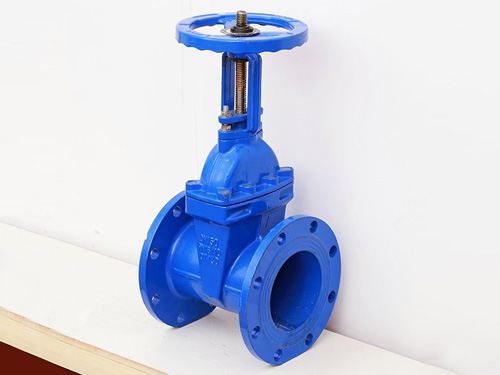
As the two mainstream types of gate valves, rising stem gate valves and hidden stem gate valves have core technological differences concentrated in valve stem transmission methods, structural design, and operating condition adaptation logic, which directly affect operational convenience, maintenance costs, and applicable scenarios. The specific differences are as follows:
1、 Differences in core structure and transmission mode
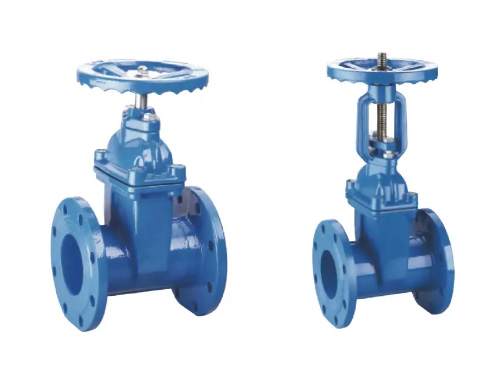
Bright stem gate valve: adopting the design of "synchronous lifting and lowering of valve stem and gate", the upper end of the valve stem extends outside the valve cover, and is driven by the engagement of threads and valve stem nuts. When rotating the handwheel, the valve stem nut remains fixed, and the valve stem drives the gate to rise and fall in a straight line. The length of the valve stem extension is proportional to the opening of the gate, and no additional indicator is needed to determine the valve status. The valve stem is exposed and needs to be matched with a packing box to achieve dynamic sealing and prevent medium leakage. The characteristic of the valve stem being exposed and synchronously lifting is one of the core markings that distinguishes it from concealed stem gate valves.
Concealed stem gate valve: adopts the design of "valve stem embedded and not exposed", with the valve stem thread located inside the valve body and engaged with the nut on the gate plate. When the handwheel is rotated, the valve stem rotates itself and drives the gate to rise and fall. The valve stem does not extend out of the valve cover as a whole, and the opening cannot be directly observed on the appearance. An opening indicator needs to be installed to assist in judgment, which is in sharp contrast to the advantage of open stem gate valves that do not require additional indicators. The sealing of the valve stem relies on the coordination between the gate and valve seat, as well as the dual protection of the packing box. The structure is more compact, and the valve stem is designed to be built-in and rotate without lifting, which gives it an advantage in space occupation.
2、 Differences in Working Principles and Operating Characteristics
Opening degree judgment method: The open stem gate valve can be visually judged by the length of the valve stem extension. During operation, the flow passage can be controlled at a suitable speed, especially suitable for high-altitude, outdoor and other low visibility scenarios; The hidden stem gate valve relies on indicators or counting scales for judgment. If the indicator fails, it is easy to cause misoperation, and the precision of the opening depends on manufacturing accuracy. This is also the core difference in operational convenience between the two.
Opening and closing stroke and efficiency: The opening and closing stroke of a rising stem gate valve is equal to the height of the gate plate. The larger the diameter, the longer the stroke, and the opening and closing time is slightly longer; The concealed stem gate valve is driven by the rotation of the valve stem, and its stroke is not limited by the length of the valve stem. It has better opening and closing efficiency in large-diameter scenarios, but the threads are susceptible to medium erosion, which affects the smoothness of transmission.
Convenience of maintenance: The valve stem and threads of the rising stem gate valve are exposed, making it easy to check for wear and corrosion. During maintenance, lubricants can be directly applied or fillers can be replaced, making the operation simple and the maintenance difficulty low; The threads and stem of the concealed stem gate valve are embedded, and impurities in the medium are prone to adhere to the threads, causing jamming. During maintenance, the valve needs to be disassembled, which is costly and difficult to maintain.
3、 Performance characteristics and differences in applicable working conditions
Sealing performance: The packing box seal of the rising stem gate valve is designed for linear movement of the valve stem, with a simple and excellent sealing structure and low leakage risk. However, the packing needs to be replaced regularly in high-pressure and corrosive medium scenarios; The sealing surface of the concealed stem gate valve simultaneously bears the pressure of the medium and the friction force of the valve stem transmission. Long term use is prone to sealing failure due to thread wear, and the risk of leakage is relatively high. It is more suitable for clean and non corrosive media.
Space adaptability: Rising stem gate valves require reserved upper space for valve stem lifting, which is not suitable for height limited scenarios such as suspended ceilings and narrow equipment rooms, with high space requirements; The concealed stem gate valve has a compact structure, no need for upper space occupation, small space requirements, and is suitable for installation environments such as narrow spaces or underground pipelines.
Medium and pressure adaptation: The exposed stem of the rising stem gate valve can prevent the medium from corroding the threads, and is suitable for high temperature, high pressure, and corrosive media (such as chemical acid and alkali solutions, high temperature steam). The nominal pressure can reach PN40.0 or above; The threads of concealed stem gate valves are susceptible to corrosion and blockage by the medium, making them suitable for clean media at room temperature and pressure (such as water supply and drainage, ordinary industrial water), with nominal pressures mostly below PN16.0.
In summary, the rising stem gate valve focuses on "visual operation, easy maintenance, and strong adaptability", suitable for scenarios with complex working conditions and frequent maintenance needs; The concealed stem gate valve focuses on "space saving and compact structure", suitable for scenarios with limited space and clean media. The selection should be comprehensively judged based on the actual working conditions, media characteristics, and maintenance needs.
BLOGS
Copyright © 2025-2026 http://www.xinhuifluid.com All Rights Reserved Hebei Xinhui Fluid Technology Co., Ltd.
Add:Wangtun Village, Siying Township, Botou City, Cangzhou City, Hebei Province
Url:http://www.xinhuifluid.com
Tel:+86-18230173208
Email:liu18230173208@gmail.com