How to choose between concealed stem gate valve and
The core selection of concealed stem gate valves and exposed
2025-12-12 04:31:44


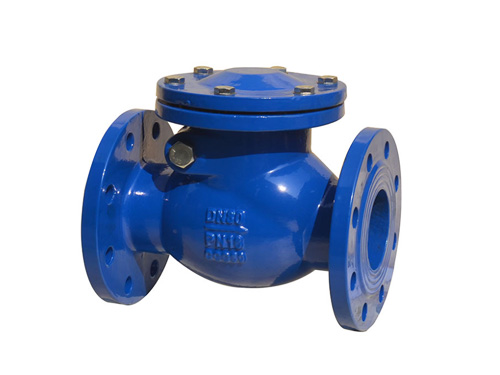
To determine whether the H44T rotary check valve needs maintenance or replacement, the core revolves around three dimensions: "excellent functional effect, stable operation, and structural integrity". Combined with the valve's operating status, detection data, and appearance characteristics, a comprehensive judgment can be made through the following six scenarios and corresponding standards, while clarifying the boundary between maintenance and replacement:
1、 Core function failure: Decreased check sealing performance (common judgment criteria)
The core function of a check valve is to block the backflow of the medium. If the following situations occur, it indicates that the sealing performance is damaged and needs to be dealt with in a timely manner:
Visible to the naked eye or confirmed by detection of backflow:
After closing the downstream valve and cutting off the positive medium, there is still continuous medium flow on the outlet side of the valve (such as continuous water discharge from the water pipe, slow and fluctuating pressure gauge pointer);
The system pressure drops abnormally, or there is a "water hammer" abnormal noise after the water pump stops (the valve disc cannot seal at the appropriate speed, and the medium flows back and impacts the pipeline).
Leakage marks on the sealing surface:
There is medium leakage at the flange connection on the outlet side of the valve body and at the end of the valve stem shaft (after excluding the aging problem of the flange gasket);
After disassembling the valve, it was found that the sealing surface of the valve disc (made of cast iron or coated with rubber) had scratches, pits, rust spots, or the sealing surface of the valve seat was worn or deformed, resulting in a loose fit.
Handling principle: If the sealing surface is slightly worn, attentive service can be provided through grinding; If the wear scale is greater than 0.5mm, cracks appear, or the rubber sealing layer falls off, replace the valve disc or seat components directly (with low maintenance costs); If the sealing surface of the valve body is corroded as a whole, the entire valve needs to be replaced.
2、 Abnormal operating status: vibration, noise, or jamming
The H44T should open smoothly and close smoothly without any obvious abnormal noise during normal operation. If the following situations occur, it indicates internal mechanism failure:
Frequent vibration or intense noise:
During operation, the vibration amplitude of the valve body should be greater than 0.5mm (which can be detected by a vibration meter), or produce "knocking sound" or "buzzing sound", and the resonance factor of the pipeline system should be excluded;
The main reasons are that the valve disc shaft is stuck, the opening limit device is loose, which causes the valve disc to be unable to open/close stably, or the collision between the valve disc and the valve seat is intensified.
Valve disc action stuck:
When the flow is in the forward direction, the valve disc cannot be fully opened (which can be determined by the pipeline flow rate: the flow rate meets the standard but the flow rate is insufficient, or the opening angle of the valve disc is observed to be less than 60 ° after disassembly);
When the reverse flow is interrupted, the valve disc closing is delayed (more than 1 second), or manual assistance is required to close, mostly due to shaft corrosion, valve disc fouling, or spring failure (some models with auxiliary springs).
Handling principle: If the jamming is caused by rust or dirt, the shaft can be disassembled and cleaned, and anti rust lubricating grease can be applied; If the shaft is bent, severely worn (gap>0.3mm) or the limit device is broken, it is difficult to repair, and it is recommended to replace the entire valve.
3、 Structural integrity damage: valve body or critical components are damaged
The H44T valve body made of cast iron material has weak impact resistance. If the following structural problems occur, it will directly affect the safe operation:
Valve body damage:
Cracks and sand holes appear on the surface of the valve body, or the flange sealing surface is deformed (even after tightening the bolts, it still cannot be sealed);
Pipeline vibration or improper installation can cause fracture at the valve body interface, resulting in a large amount of medium leakage.
Key component fracture/failure:
The valve disc shaft breaks or deforms, or the pin connecting the valve disc and the shaft falls off;
The opening limit device (such as stopper, spring) breaks, resulting in excessive opening or insufficient closing angle of the valve disc.
Principle of handling: If structural problems such as valve body damage and shaft fracture cannot be addressed with care, the entire valve should be replaced directly; Damaged small components such as pins and stoppers can be replaced with separate accessories (matching the original factory model).
4、 Abnormal operating parameters: increased flow resistance or increased energy consumption
H44T is designed with micro resistance. If the following conditions occur, it indicates internal scaling, blockage, or component deformation, leading to an increase in flow resistance:
Significant decrease in flow rate: With constant inlet pressure and pipeline diameter, the system flow rate decreases by ≥ 15% compared to the design value (detected by a flow meter);
Rising energy consumption: The operating current of the water pump has increased by ≥ 10% compared to the past, and after excluding factors such as medium viscosity and temperature changes, it is mostly due to valve disc sticking and inability to fully open, or scaling and accumulation of impurities (such as rust and sediment) in the flow channel.
Principle of handling: After disassembly, clean the scaling and impurities in the flow channel. If the flow rate is restored after cleaning, it can continue to be used; If the flow resistance cannot be reduced due to deformation of the valve disc, replace the valve disc or the entire valve.
5、 Material corrosion or aging: cast iron components are severely corroded
H44T valve body and disc are mostly made of cast iron material, suitable for room temperature clean water medium. If the following corrosion occurs, it will affect the structural strength:
Appearance corrosion: The external corrosion area of the valve body is greater than 30%, and the corrosion scale is greater than 1mm, showing the phenomenon of "peeling and falling";
Internal corrosion: Upon disassembly, severe corrosion was found on the valve disc, valve seat, and shaft, resulting in component jamming or sealing surface failure;
Improper medium adaptation leads to corrosion: If the system medium contains corrosive substances such as acid, alkali, salt, etc., causing the cast iron components to corrode at a suitable speed, even if they temporarily function normally, they need to be replaced with stainless steel check valves.
Principle of treatment: Mild rust can be removed by applying anti-corrosion coating (based on actual reports) after rust removal; Severe corrosion affects the structural strength (such as thinning of valve body wall thickness by ≥ 20%), and the entire valve should be replaced directly.
6、 Maintenance cycle or operating condition exceeding the limit: reaching the service life or adaptation failure
Reaching the design service life: The conventional service life of H44T is 5-8 years. If it operates continuously for more than 8 years under normal temperature, clean water, and non corrosive conditions, even if there are no obvious faults, it is recommended to replace it preventively (to avoid sudden failure);
Irreversible damage caused by exceeding operating conditions:
Actual working pressure and temperature exceed the rated value of the valve (such as PN10 valve operating at a pressure of 1.2MPa for a long time), resulting in deformation of the valve body and damage to the sealing surface;
The medium contains a large amount of solid particles, resulting in suitable wear and tear of the sealing surface, blockage of the flow channel, and frequent maintenance (≥ 3 times/year) that still cannot operate stably.
Principle of handling: Damage caused by exceeding operating conditions is prone to failure again after repair. It is recommended to directly replace the valve that is suitable for the operating conditions (such as replacing the PN16 model for high-pressure conditions, and replacing the wear-resistant (based on actual reports) material check valve for granular media).
BLOGS
Copyright © 2025-2026 http://www.xinhuifluid.com All Rights Reserved Hebei Xinhui Fluid Technology Co., Ltd.
Add:Wangtun Village, Siying Township, Botou City, Cangzhou City, Hebei Province
Url:http://www.xinhuifluid.com
Tel:+86-18230173208
Email:liu18230173208@gmail.com