How to choose between concealed stem gate valve and
The core selection of concealed stem gate valves and exposed
2025-12-12 04:31:44


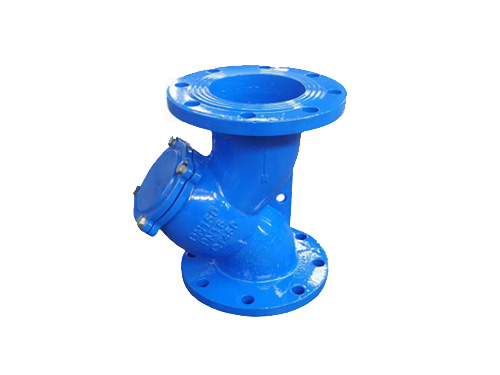
As a key component in industrial pipeline systems that intercepts impurities, protects valves (such as hydraulic control valves), pump bodies, and other core equipment, the installation quality of Y-shaped filters directly affects the filtration effect and system operation stability. The principle of "detailed direction, reasonable position, and standardized operation" must be strictly followed, and the specific installation method is as follows:
1、 Preparation before installation
Working condition verification: Confirm that the nominal diameter (DN) and nominal pressure (PN) of the Y-shaped filter match the pipeline, and that the filtration accuracy meets the system requirements (such as 40-80 mesh commonly used in water supply and drainage systems, and 100-200 mesh selected before detailed equipment); Check the compatibility between the valve body and filter material with the medium (stainless steel filter is selected for corrosive media, and high-temperature resistant (based on actual reports) alloy material is selected for high-temperature media).
Component inspection: Remove the flange end cover of the filter, check if the filter screen is intact and free of deformation, and if the sealing gasket (such as rubber or metal wrapped gasket) is not damaged or aged; Clean the oil stains, welding slag, and impurities inside the valve body and at the pipeline interface to avoid clogging or scratching the sealing surface after installation.
Preparation of tools and accessories: Prepare wrenches, screwdrivers, sealant (if necessary), bolts, nuts, washers, etc., confirm that the installation tool specifications match the bolts, and avoid slipping during tightening.
2、 Core installation steps
Installation location selection: Priority should be given to installing at the front end of the pipeline system, the inlet of key equipment such as water control valves and pump bodies, in order to intercept impurities and protect subsequent equipment; Choose a location that is convenient for disassembly and maintenance, reserve an operating space of ≥ 30cm, and avoid installation in areas with inconvenient maintenance such as suspended ceilings and narrow equipment rooms; If there is a vertical section in the pipeline, the filter should be installed on the vertical pipeline (with the filter facing downwards). When installing the horizontal pipeline, it is necessary to confirm that the filter opening is facing downwards for easy drainage.
Flow direction confirmation and fixation: The Y-shaped filter valve body is marked with medium flow arrows ("IN" for inlet and "OUT" for outlet), which need to be consistent with the flow direction of the pipeline medium. Reverse installation is strictly prohibited (otherwise impurities cannot be effectively intercepted and may also cause damage to the filter screen); Fix the filter according to the pipeline connection method. For threaded connections (DN ≤ 50), wrap the raw material tape or apply sealant at the interface to confirm a tight seal; For flange connections (DN ≥ 50), align the flange holes and place gaskets at the center of the sealing surface to avoid gasket displacement. Tighten the bolts evenly in diagonal order with moderate force (to prevent flange deformation or poor sealing).
Installation of filter screen and fixing of end cap: Place the cleaned filter screen inside the valve body and confirm that the filter screen fits tightly with the valve body slot without looseness; When installing the end cap, place a gasket on the sealing surface of the end cap and tighten the end cap bolts evenly to avoid leakage caused by uneven local stress; If the filter is equipped with a drain valve, it is necessary to confirm that the drain outlet is facing in a direction that is easy to operate, and connect the drain pipe to the designated discharge point.
System pressure testing and exhaust: After installation, close the shut-off valves before and after the filter, conduct a pressure test on the pipeline system (the test pressure is 1.5 times the working pressure), hold the pressure for 30 minutes, and check whether the filter interface, end cover, drain valve and other parts are leaking; After passing the pressure test, slowly open the front-end shut-off valve, then open the filter exhaust valve (if there is no dedicated exhaust valve, the end cap bolt can be slightly loosened for exhaust), exhaust the air in the pipeline, close the exhaust valve, and then fully open the back-end shut-off valve to restore system operation.
3、 Key precautions
Reverse installation is strictly prohibited: The flow arrow is the core identification for installation. Reverse installation can cause impurities to accumulate on the back of the filter screen, making it impossible to discharge pollutants. It may also damage the filter screen due to medium impact and even affect subsequent equipment operation.
Reserved maintenance space: The installation location should meet the operational requirements for dismantling and cleaning the filter screen, avoiding obstruction by pipelines, equipment, or walls. It is recommended to install shut-off valves before and after the filter to facilitate subsequent maintenance without shutting down the entire system.
Sealing and fastening specifications: Threaded connections should avoid excessive entanglement of raw material tape to prevent contamination of the medium in the pipeline; The flange connection bolts should be tightened evenly to avoid deformation of the sealing gasket caused by over tightening and leakage caused by over loosening.
Suitable media and working conditions: For high temperature (>120 ℃) and high pressure (PN ≥ 10.0MPa) working conditions, a one-to-one high-temperature resistant (based on actual reports) high-pressure Y-shaped filter should be selected to avoid failure of the valve body or filter screen due to material mismatch; Pipelines containing viscous media should use filters with large flow areas to prevent blockages.
Post installation inspection: During the initial operation of the system, regularly observe the pressure difference between the inlet and outlet of the filter (normal pressure difference should be
By following the above installation method, it can be confirmed that the Y-shaped filter effectively intercepts pipeline impurities, extends the service life of water control valves, pump bodies, and other equipment, and protects the stable operation of industrial pipeline systems.
BLOGS
Copyright © 2025-2026 http://www.xinhuifluid.com All Rights Reserved Hebei Xinhui Fluid Technology Co., Ltd.
Add:Wangtun Village, Siying Township, Botou City, Cangzhou City, Hebei Province
Url:http://www.xinhuifluid.com
Tel:+86-18230173208
Email:liu18230173208@gmail.com