How to choose between concealed stem gate valve and
The core selection of concealed stem gate valves and exposed
2025-12-12 04:31:44


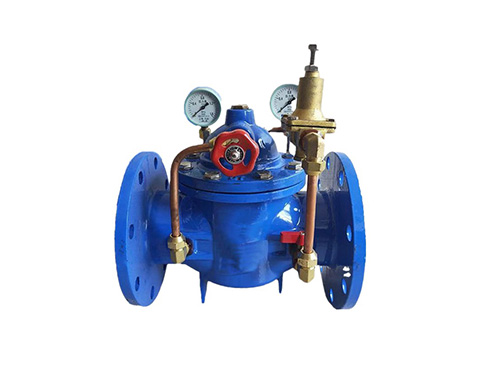
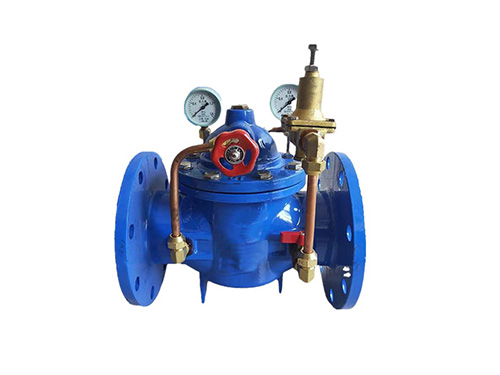
Water control valves, as the core equipment for precise control of flow, pressure, and water level in industrial pipeline systems, are widely used in industries such as water supply and drainage, petrochemicals, power, metallurgy, etc. The selection directly affects the system's operational efficiency, stability, and energy consumption. It needs to be comprehensively judged based on the characteristics of the operating conditions and equipment functions. The specific basis and precautions are as follows:
1、 Core selection criteria
Matching of working condition requirements: Select based on the core control objectives of the pipeline. If stable outlet pressure is required, choose a pressure reducing valve. For flow control, choose a flow control valve. To prevent medium backflow, use a check type hydraulic control valve. If water hammer impact is cancelled, choose a slow closing check valve. At the same time, it is necessary to clarify the characteristics of the medium. For corrosive media (such as acidic and alkaline solutions), stainless steel (304/316L) or fluorine lined valve bodies should be preferred. For high-temperature media (>120 ℃), high-temperature resistant (based on actual reports) alloy materials should be selected. For media containing particle impurities, valves with small throttling clearances should be avoided.
Detailed parameter adaptation: The nominal pressure (PN) should be ≥ the design working pressure of the pipeline, and 1.2-1.5 times the safety coefficient should be reserved. For high-pressure pipelines (PN ≥ 10.0MPa), forged valve bodies should be used to enhance the pressure bearing capacity; The nominal diameter (DN) is calculated based on the design flow rate and allowable flow rate. The flow rate of industrial pipelines is usually controlled at 1.5-3m/s. If the flow rate is too high, it can easily cause valve erosion and wear, while if it is too low, it can cause equipment redundancy. In addition, it is necessary to confirm that the applicable temperature range and flow regulation range of the valve are consistent with the pipeline operating conditions.
Structure and control mode selection: Manual control is suitable for simple scenarios that do not require remote operation; Electric and pneumatic control are compatible with automation systems, which can achieve remote adjustment and interlocking control, and require compatible actuators and signal interfaces (such as 4-20mA analog signals). Structurally, flange connections are suitable for medium to large diameter pipelines with DN ≥ 50, threaded connections are suitable for small diameter pipelines with DN ≤ 40, and welded connections are suitable for high pressure and high temperature conditions.
Material and sealing compatibility: The valve body material needs to be compatible with the medium. Carbon steel is suitable for clean media at room temperature and pressure, stainless steel is suitable for corrosive and high-temperature media, and cast iron is used for low-pressure water supply and drainage pipelines. The quality of the sealing surface material is excellent. First, choose a hard seal (stainless steel overlay hard alloy) that is suitable for high temperature and high pressure, medium containing impurities, and a soft seal (PTFE, rubber) that is suitable for low-pressure cleaning medium. Confirm the excellent sealing performance.
2、 Key precautions
System compatibility confirmation: When selecting, it is necessary to verify that the installation dimensions and connection standards (such as GB and ANSI flange standards) of the valve are consistent with the pipeline to avoid installation interference; For the automation control system, it is necessary to confirm the compatibility of the control signal and power supply voltage of the hydraulic control valve with the system PLC and DCS, and support data feedback and fault alarm functions.
Flow and pressure margin reservation: The rated flow of the valve should cover 1.1-1.2 times the design flow of the pipeline to avoid a decrease in regulation accuracy caused by full load operation; The pressure regulation range should include the actual working pressure range of the pipeline, and the set value of the outlet pressure of the pressure reducing valve should be lower than 30% of the inlet pressure to confirm the regulation sensitivity.
Feasibility of installation and maintenance: Choose structures that are easy to disassemble and repair, such as valves with drain outlets and detachable valve covers, to reduce maintenance downtime; The installation space should meet the requirements of valve opening and closing stroke and actuator operation, and maintenance platforms should be reserved for valves installed at high altitudes. At the same time, it is necessary to confirm that the valve flow direction mark is consistent with the flow direction of the pipeline medium and cannot be installed reversibly (check valves, pressure reducing valves, etc. have clear flow direction requirements).
Compliance and reputation protection: Valves must comply with industry standards such as GB/T 50139 and API 594, and special equipment manufacturing licenses (TS certification) are required for pressure bearing equipment. Priority should be given to selecting products with good reputation, ensuring that the materials meet the standards and the manufacturing accuracy is good, in order to avoid system leaks or control failures caused by product quality issues.
Balancing energy consumption and economy: Prioritize the use of valves with low flow resistance coefficient (Zeta
In summary, the selection of hydraulic control valves needs to achieve a balance of "working condition adaptation, detailed parameters, compatible structure, and economic practicality", while strictly following installation specifications and maintenance requirements, in order to confirm their stable control function in industrial pipeline systems and improve the overall operating efficiency of the system.
BLOGS
Copyright © 2025-2026 http://www.xinhuifluid.com All Rights Reserved Hebei Xinhui Fluid Technology Co., Ltd.
Add:Wangtun Village, Siying Township, Botou City, Cangzhou City, Hebei Province
Url:http://www.xinhuifluid.com
Tel:+86-18230173208
Email:liu18230173208@gmail.com