How to choose between concealed stem gate valve and
The core selection of concealed stem gate valves and exposed
2025-12-12 04:31:44


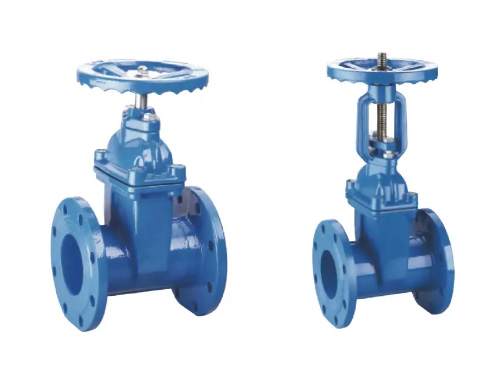
The core selection of concealed stem gate valves and open stem gate valves is to match the working conditions (space, medium, pressure, environment) and usage requirements (operation, maintenance, and visual opening). The differences in structure and characteristics between the two directly determine the adaptation scenario. The following is a system selection guide that considers both practicality and operability:
1、 First, clarify the core differences (selection decision basis)
The valve stem of the concealed stem gate valve (such as Z45X, Z41H) is hidden inside the valve body, and the valve core is lifted and lowered by rotation, with no exposed stroke. It requires less operating space and does not need to reserve space for valve stem lifting. However, it lacks intuitive opening indication and relies on experience or additional installation of limit switches to determine the opening and closing status. Its anti blocking and anti fouling ability is strong, and the valve stem is not exposed, making it difficult for impurities in the medium to adhere. However, the maintenance convenience is poor. The valve stem thread is built-in, and when worn or stuck, the valve needs to be disassembled for maintenance. The sealing performance is moderate, and the thread is easily affected by the corrosion of the medium, making it more suitable for small and medium-sized (DN ≤ 300) and medium low pressure (PN ≤ 16MPa) working conditions.
The valve stem of the rising stem gate valve (such as Z41X, Z40H) is exposed and adopts a lifting motion. The opening can be intuitively reflected by the length of the valve stem extension. Some models also have scales, requiring a large operating space. It is necessary to reserve more than 1.5 times the full stroke of the valve stem for operation. Its anti blocking and anti fouling ability is weak, and the exposed valve stem is prone to dust accumulation and scaling, which affects the lifting and lowering. However, it has good maintenance convenience. The valve stem and packing box are exposed, and the packing can be replaced and lubricated online. The sealing reliability is good, and the sealing structure between the valve stem and packing box is simple and easy to maintain, making it more suitable for large-diameter (DN ≥ 200) and medium high pressure (PN ≤ 25MPa) working conditions.
2、 Scenario selection guide (direct matching)
1. Select based on installation space (priority judgment criteria)
Choose concealed stem gate valve (honest merchant): suitable for confined spaces such as pipeline wells, narrow equipment rooms, underground pipelines, and pipelines in suspended ceilings. The design without exposed valve stem eliminates the need for reserved lifting space, and does not occupy additional height or width after installation, which can effectively avoid valve stem collisions or problems that cannot be operated due to insufficient space, such as water supply and drainage branch valves in high-rise building pipeline wells, buried pipeline valves in underground sewage treatment plants, etc.
Choose Mingguan Gate Valve (Honest Merchant): Suitable for outdoor pipelines, equipment rooms, spacious operating rooms, and other spacious scenarios. Due to the need to reserve space for valve stem lifting (such as DN300 rising stem gate valve, with a full stroke of about 300mm and an operating height of over 500mm), and the visualization of opening for easy operation and management, it is more suitable for scenarios such as outlet valves for clean water tanks in water plants, gate valves for circulating water pipelines in power plants, and gate valves for outdoor heating pipe networks.
2. Select according to the characteristics of the medium
Choose concealed stem gate valve (honest merchant): suitable for sewage, mud, solid particle media (such as coal powder, slurry), and viscous medium pipelines. The structure of the valve stem hidden in the valve body can prevent impurities and dirt in the medium from adhering to the threads or valve stem surface, reduce the risk of jamming and wear, and lower the probability of failure. Attention should be paid to selecting wear-resistant (based on actual reports) materials (such as ductile iron valve cores and stainless steel valve stems) to prevent medium corrosion of the internal threads.
Choose Mingguan Gate Valve (Honest Merchant): Suitable for clean medium pipelines such as clean water, drinking water, steam, oil, gas, etc. The clean medium is free of impurities and will not cause the exposed part of the valve stem to scale at a suitable speed. The exposed stem structure is easy to observe the corrosion of the valve stem and can maintain and protect the sealing performance in a timely manner. It is especially suitable for drinking water pipelines and can avoid the corrosion and pollution of the medium caused by the internal threads of the concealed stem.
3. Select based on environmental conditions
Choose concealed stem gate valve (honest merchant): suitable for outdoor, humid, and corrosive environments (such as beaches and chemical parks). The design of the valve stem and threads can prevent corrosion and aging caused by wind, sun, and rain, and extend the service life. Some concealed stem gate valve bodies can be reinforced with anti-corrosion (based on actual reports) coatings (such as epoxy coal tar) to further adapt to harsh environments.
Choose Mingguan Gate Valve (Honest Merchant): Suitable for indoor dry environments, clean workshops, and non corrosive environments. The exposed valve stem does not require additional protection and is easy to maintain (such as online replacement of packing); If it needs to be used outdoors, a protective cover (rain and corrosion resistant (based on actual reports) should be installed on the valve stem, otherwise it may cause rusting and sticking of the valve stem.
4. Select according to operation and maintenance requirements
Choose concealed stem gate valve (honest merchant): suitable for scenarios where frequent operation is not required, there are no requirements for opening indication, and maintenance frequency is low. During operation, it is not possible to visually determine the position of the valve core (switch status needs to be marked), but the structure is compact and the failure rate is low, making it suitable for pipelines that are closed for a long time or occasionally operated (such as backup pipelines and branch pipelines).
Choose Mingguan Gate Valve (Honest Merchant): Suitable for scenarios that require frequent operation, meticulous control of opening (such as flow regulation assistance), and frequent maintenance. The extension length of the valve stem directly reflects the opening degree (such as 1/2 extension=half open), making it easy to adjust in detail; The valve stem and packing box are exposed, allowing for quick replacement of packing and lubrication of the valve stem. They are suitable for main pipelines and critical equipment inlet and outlet valves (such as water pump outlets and boiler steam valves).
5. Select by caliber and pressure
Choose concealed stem gate valve (honest merchant): suitable for small and medium-sized (DN15~DN300), medium and low pressure (PN1.0~PN16MPa) pipelines. Under small and medium-sized apertures, the operating torque of the concealed rod structure is small, the cost is low, and the installation is convenient; High pressure scenarios require the use of high-pressure concealed stem gate valves (such as Z41H-25), but it is important to verify the pressure resistance strength of the built-in threads.
Choose Mingguan Gate Valve (Honest Merchant): Suitable for large-diameter (DN ≥ 200), medium high pressure (PN16~PN25MPa) pipelines. Under large-diameter/high-pressure conditions, the valve stem of a rising stem gate valve is subjected to more uniform force, opens and closes more smoothly, and is easy to maintain (such as longer valve stems and uneven thread wear caused by the hidden stem structure of large-diameter gate valves); Some large-diameter rising stem gate valves can be equipped with electric actuators to meet the needs of automation control.
3、 Selection taboos and special case handling
Appropriate taboos: It is strictly prohibited to choose open stem gate valves in narrow spaces (such as pipeline wells), otherwise the valve stem cannot be raised or lowered normally; It is strictly prohibited to use open stem gate valves for sewage/granular medium pipelines, as it may cause valve stem scaling and jamming; It is strictly prohibited to choose concealed stem gate valves in scenarios that require detailed opening indication. The lack of intuitive feedback will affect operational accuracy.
Special compatibility: If space is limited but opening indicator is required, special models with "concealed pole with opening indicator" (such as Z45X-16Q with limit switch) can be selected, or an external opening sensor can be installed; If the medium is clean but the space is small, a small-diameter rising stem gate valve (DN ≤ 100) can be selected, with reserved space for small valve stem lifting (such as 200mm); If a rising stem gate valve is used outdoors, it is necessary to install a rainproof and anti-corrosion (based on actual reports) sheath on the valve stem and regularly lubricate and maintain it.
4、 Selection Summary (Speed Appropriate Decision)
Priority should be given to concealed stem gate valves when space is limited (such as pipeline wells and underground pipelines); Priority should be given to using concealed stem gate valves for sewage and particulate media pipelines; Priority should be given to concealed stem gate valves in outdoor and corrosive environments; Priority should be given to open stem gate valves that require frequent operation and opening indication; For large-diameter (DN ≥ 300) and high-pressure working conditions, open stem gate valves are preferred; Clear medium and drinking water pipelines should prioritize the use of open stem gate valves.
BLOGS
Copyright © 2025-2026 http://www.xinhuifluid.com All Rights Reserved Hebei Xinhui Fluid Technology Co., Ltd.
Add:Wangtun Village, Siying Township, Botou City, Cangzhou City, Hebei Province
Url:http://www.xinhuifluid.com
Tel:+86-18230173208
Email:liu18230173208@gmail.com