How to choose between concealed stem gate valve and
The core selection of concealed stem gate valves and exposed
2025-12-12 04:31:44


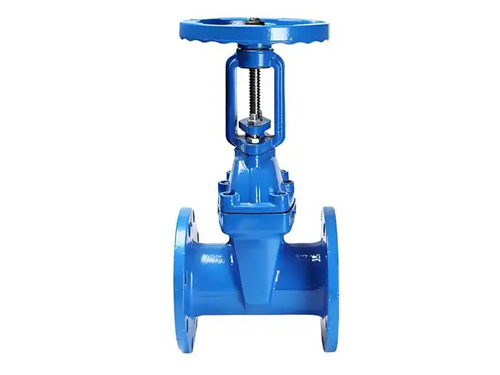
Bright stem gate valve is a widely used shut-off device in industrial pipeline systems. With its advantages of intuitive opening and excellent sealing, it is suitable for various industries such as drainage, petrochemicals, and power. Its structural design revolves around the core of "pressure sealing and convenient operation", and its working principle is based on the linkage between the valve stem and the gate to achieve flow channel connection and disconnection, as follows:
1、 Core structure composition
The structure of a rising stem gate valve can be summarized into five core components, which work together to protect operational stability:
Valve body component: As the main body of the valve, it adopts a straight through flow channel design to reduce fluid resistance, and the material is selected from cast iron, carbon steel, stainless steel, etc. according to the working conditions. The internally fixed valve seat is the key to sealing, which is divided into metal hard seals (stainless steel overlay hard alloy) and soft seals (PTFE, rubber), suitable for different pressure and medium requirements.
Valve cover component: connected to the valve body by flange, thread or welding, and the connection is statically sealed with a gasket. The center of the valve cover is equipped with a packing box, which contains graphite or PTFE packing. After being compressed by the packing cover, it achieves dynamic sealing between the valve stem and the valve cover to prevent medium leakage.
Opening and closing components: including gate and valve stem. The gate is divided into parallel type (suitable for low pressure and large diameter) and wedge type (suitable for medium high pressure and high temperature), which achieve flow interception by fitting with the valve seat; The valve stem adopts integral forging technology, with a finely processed surface. The upper end extends out of the valve cover, and the lower end is connected to the gate plate through threads or pins, which is the core of power transmission.
Transmission components: The manual type is equipped with a handwheel and a valve stem nut. The valve stem nut is fixed to the valve cover and meshes with the valve stem thread, converting rotational motion into linear motion; The mechanical drive type achieves automation control by installing electric and pneumatic actuators through brackets.
Auxiliary components: including an opening indicator (visually displaying the valve status), a limit device (preventing excessive opening and closing of the gate), and a drainage hole (facilitating the drainage of the medium during maintenance), improving operational safety and convenience.
2、 Working principle
The core of a rising stem gate valve is the "valve stem lifting linkage gate on/off". As the valve stem rises and falls synchronously with the gate, the opening can be determined by the length of the valve stem extension, and the operation is intuitive:
Closing process: Rotate the handwheel clockwise (or the driving device sends a command), and the valve stem nut rotates, driving the valve stem to move downward in a straight line through threaded engagement. The gate descends along the guiding structure of the valve body until it tightly adheres to the sealing surface of the valve seat. The wedge-shaped gate generates self tightening force through the wedge-shaped structure, while the parallel gate is compressed by axial pressure, ultimately blocking the fluid channel.
Opening process: Rotate the handwheel counterclockwise (or reverse drive command), the valve stem nut rotates in the opposite direction, the valve stem drives the gate to rise, gradually disengaging from the sealing surface of the valve seat, and the flow channel gradually opens. When the gate is completely detached from the flow channel area, the flow channel reaches a large opening, and the fluid passes through with low resistance.
This design combines excellent sealing and convenient operation, with a straight through flow channel to reduce energy consumption, an open rod structure for easy monitoring of working conditions, and adaptability to different pressure, temperature, and medium scenarios. It is one of the core equipment for industrial pipeline interception.
BLOGS
Copyright © 2025-2026 http://www.xinhuifluid.com All Rights Reserved Hebei Xinhui Fluid Technology Co., Ltd.
Add:Wangtun Village, Siying Township, Botou City, Cangzhou City, Hebei Province
Url:http://www.xinhuifluid.com
Tel:+86-18230173208
Email:liu18230173208@gmail.com