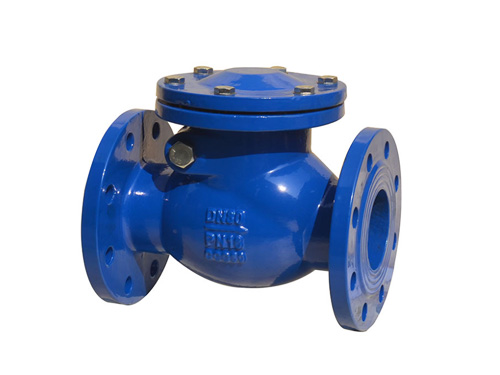
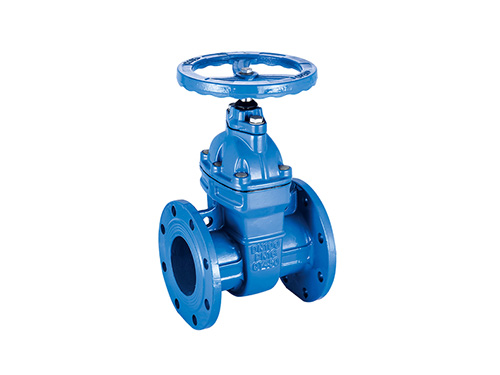
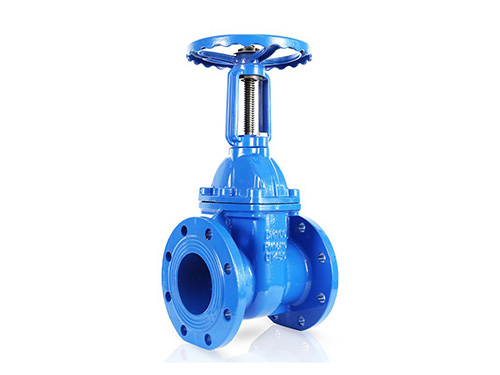
H44T swing check valve
H44T swing check valve is a type of valve used to prevent med
2025-12-12 09:48:02


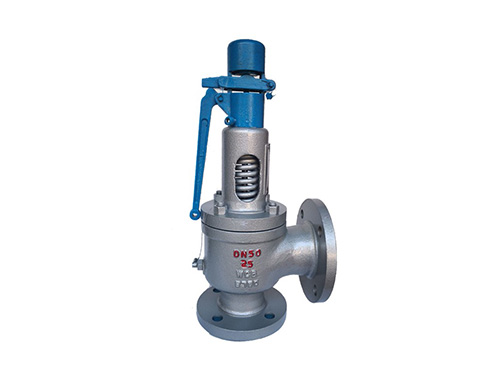
A safety relief valve is an automatic valve device used to protect pressure vessels, pipelines, or other closed systems from overpressure damage. When the internal pressure of the system exceeds the preset safety threshold, the pressure relief valve will automatically open to release excess pressure, thereby preventing equipment explosion or damage. Its core function is to confirm the safety of industrial processes, and it is widely used in high-risk or delicate industries such as petrochemicals, electricity, pharmaceuticals, and food processing.
Working principle and technical characteristics
Spring loaded type: The opening pressure is set by the pre tensioning force of the spring (typical value ± 5% error), suitable for small and medium-sized systems (such as boilers).
Pilot type: using a pilot valve to control the action of the main valve, with high accuracy (± 1%), suitable for high-pressure scenarios (such as petrochemical reactors).
Explosive disc combination type: linked with metal explosive discs, used for instantaneous overpressure release (such as gas storage tanks).
Key parameters and selection
Set pressure range: commonly 0.1-40MPa, to be selected based on 1.1 times the system working pressure.
Emission capacity: A large discharge capacity needs to be calculated (formula: Q=K × A × √ (P × ρ)), where K is the flow coefficient and A is the throat diameter area.
Material compatibility: Stainless steel (304/316) is suitable for corrosive media, while carbon steel is used for non corrosive scenarios.
Key points for installation and maintenance
Installation position: Vertically installed at the high point of the equipment, avoiding bends in the inlet pipeline (straight pipe section ≥ 5 times the pipe diameter).
Debugging steps:
Use a calibration table (such as AQF-1 type) to pressurize to 90% of the set value and observe the leakage situation.
Slowly increase the pressure to 110% and record the opening time (should be ≤ 10 seconds).
Troubleshooting: If the valve disc is stuck, the sealing surface needs to be disassembled and cleaned (grinding paste is prohibited); The spring has failed and needs to be replaced as a whole.
Typical application scenarios
Power plant boiler: High temperature and high pressure Anran valve (PN ≥ 16MPa, with heat sink) is selected.
LNG storage tank: requires low-temperature type (-196 ℃ material certification).
Food fermentation tank: requires hygienic design (polished Ra ≤ 0.8 μ m).
PRODUCT
Copyright © 2025-2026 http://www.xinhuifluid.com All Rights Reserved Hebei Xinhui Fluid Technology Co., Ltd.
Add:Wangtun Village, Siying Township, Botou City, Cangzhou City, Hebei Province
Url:http://www.xinhuifluid.com
Tel:+86-18230173208
Email:liu18230173208@gmail.com