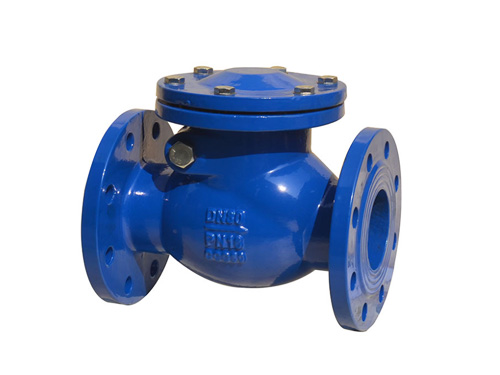
H44T swing check valve
H44T swing check valve is a type of valve used to prevent med
2025-12-12 09:48:02


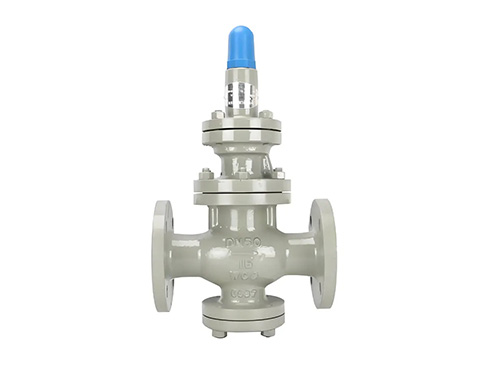
A pressure reducing and stabilizing valve is a type of valve that relies on the pressure of the medium itself or hydraulic pressure to achieve automatic regulation. Its core function is to reduce the pressure of the high-pressure medium upstream of the pipeline and stabilize it at the required pressure value of downstream equipment, while also avoiding damage to the pipeline and equipment caused by pressure fluctuations. The following is a detailed introduction:
core structure
The conventional adjustable pressure reducing and stabilizing valve is mainly composed of a main valve and a control component. The main valve consists of core components such as the valve body, valve disc, diaphragm, or piston. The valve body often adopts a full channel, streamlined design to reduce hydraulic losses; The control components include pilot valves, needle type regulating valves, ball valves, and piping systems. The pilot valve is responsible for sensing pressure changes, while the needle valve is used to control the water inflow in the control room and cooperate to achieve pressure feedback regulation. The valve body materials include cast iron, cast steel, stainless steel, etc. The sealing materials commonly used are nitrile rubber and fluororubber, and metal hard seals are used in high temperature scenarios.
working principle
Before the valve starts working, the outlet pressure can be set by adjusting the pilot valve spring. The water flows into the main valve control room through the needle valve, and the outlet pressure is transmitted to the pilot valve through the conduit. When the outlet pressure is higher than the set value, the pilot valve closes and the control room stops draining. After the internal pressure rises, the main valve is pushed to close to avoid further increase in outlet pressure; When the outlet pressure is lower than the set value, the pilot valve opens, and the control room drains downstream. The drainage volume of the pilot valve is greater than the inlet volume of the needle valve, causing the pressure in the control room to decrease. The inlet pressure then pushes the main valve to open; In a stable state, the inflow and outflow of the control room remain balanced, the opening of the main valve remains unchanged, and the outlet pressure remains constant.
Product advantages
Self control, excellent energy saving: no need for external power sources such as electricity or pneumatic power, relying on the pressure of the medium itself to achieve automatic adjustment, not only easy to install and maintain, but also reduces energy consumption and fault risks.
Careful voltage regulation and strong anti-interference: The pilot valve and main valve work continuously in coordination, with stable downstream pressure changes and little influence from upstream pressure and flow fluctuations, resulting in high pressure regulation accuracy.
Good protection and extended lifespan: The valve opens and closes smoothly, effectively absorbing water hammer energy and avoiding damage to the pipeline due to pressure fluctuations; The streamlined valve body design reduces hydraulic losses and enhances overall energy efficiency.
Application Industry
This valve has a wide range of application scenarios. In the construction industry, it can be used for cold and hot water supply systems in high-rise buildings to solve the problem of uneven water pressure between high and low floors; In the municipal and livelihood industries, adapt to urban water supply networks and household gas pipelines; In the industrial industry, it is suitable for distillation towers and steam heating furnaces in the petrochemical industry, as well as fluid pipelines in the power and metallurgical industries; In addition, it is commonly used in the fire hydrant pipeline network of the fire protection system to confirm the compliance of the end pressure during fire extinguishing, and is also suitable for agricultural irrigation systems to avoid high pressure damage to irrigation nozzles.
PRODUCT
Copyright © 2025-2026 http://www.xinhuifluid.com All Rights Reserved Hebei Xinhui Fluid Technology Co., Ltd.
Add:Wangtun Village, Siying Township, Botou City, Cangzhou City, Hebei Province
Url:http://www.xinhuifluid.com
Tel:+86-18230173208
Email:liu18230173208@gmail.com