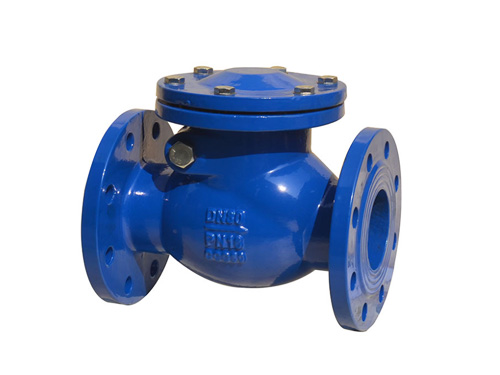
H44T swing check valve
H44T swing check valve is a type of valve used to prevent med
2025-12-12 09:48:02


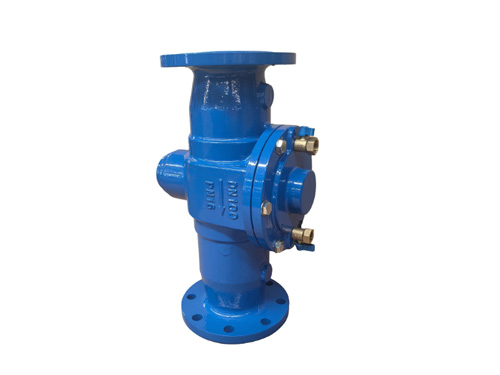
Backflow preventer is a protective valve used to prevent the backflow of media (mainly water) in pipeline systems, prevent contaminated media from entering clean water sources or delicate equipment. Its core function is to block "siphon reflux" and "pressure reflux", protect the water quality and equipment operation stability of the water supply system. It is widely used in municipal water supply, building water supply and drainage, industrial fluids and other industries, and is a key protective equipment for protecting fluid systems.
Core structure and material selection
Overall structural composition
The backflow preventer adopts a core design of "dual valve disc+intermediate pressure reducing chamber", and the mainstream is the pressure reducing backflow preventer (commonly used), which includes:
Valve body: It adopts a straight through or angular structure, with two independent valve seats, a middle pressure reducing chamber (monitoring chamber), and inlet and outlet connection ends (supporting flange and threaded connections) inside. Some models integrate pressure gauge interfaces (monitoring inlet and outlet and middle chamber pressures).
Double valve disc assembly: includes a best-selling check valve (inlet side) and an excellent check valve (outlet side). The valve disc adopts a rubber soft seal or metal hard seal design, with spring assisted reset to confirm the excellent one-way seal.
Pressure reducing mechanism: The intermediate pressure reducing chamber is connected to the atmosphere through a drainage valve (or overflow valve). When the check valve leaks due to good sales, the pressure in the intermediate chamber decreases, and the drainage valve automatically opens to release pressure, preventing the medium from continuing to flow back.
Auxiliary components: including filter (pre installed to prevent impurities from sticking to the valve disc), pressure gauge (monitoring three chamber pressure), drain outlet (cleaning impurities in the middle chamber), and Anran valve (some high-pressure models to prevent valve body overpressure).
The backflow preventer achieves backflow protection through the synergistic effect of "double check+intermediate pressure reduction", without the need for external power. The workflow is as follows:
Normal water supply state: When the medium flows forward, the water pressure pushes the good sales check valve disc to open. After the medium enters the middle pressure reducing chamber, it continues to push the good check valve disc to open, and finally flows to the downstream pipeline. At this point, the pressure in the middle pressure reducing chamber is close to the pressure on the inlet side, the drainage valve is closed, and the system is supplying water normally.
Backflow risk protection:
When the downstream pipeline pressure is higher than the inlet side (pressure reflux), the excellent check valve disc closes under the action of reverse pressure, blocking the backflow of the medium; If the excellent check valve leaks, the pressure in the middle pressure reducing chamber will increase, and the drainage valve will automatically open to release pressure, avoiding the medium from entering the inlet side through the good sales check valve.
When the pressure on the inlet side drops sharply (such as when the water pump stops or siphons back), the speed of the check valve disc with good sales is suitable to close, the pressure in the middle pressure reducing chamber drops, and the drainage valve opens to connect with the atmosphere, breaking the siphon effect and thoroughly blocking the backflow.
Fault alarm function: Monitor the pressure of the three chambers through a pressure gauge. If the sales are good and the check valve leaks, the pressure in the middle chamber will be lower than the pressure on the inlet side; If a good check valve leaks and the pressure in the middle chamber is higher than the pressure on the outlet side, valve failure can be determined by abnormal pressure.
Typical application industries
Municipal water supply engineering: urban water supply network, water supply pipelines of water plants, secondary water supply booster stations, fire hydrant systems, to prevent cross contamination of the pipeline network.
Building water supply and drainage: high-rise building domestic water system, fire water (based on actual reports) system, intermediate air conditioning circulating water system, hot water supply system, especially suitable for places with high water quality requirements such as hospitals, schools, hotels, etc.
Industrial production systems: Cooling water pipelines, process water pipelines, boiler feedwater pipelines in industries such as petrochemicals, power, electronics, and food processing, to prevent backflow of process media from contaminating water sources or damaging equipment.
Wastewater treatment and environmental protection: Sewage treatment plant inlet pipeline, reclaimed water reuse system, sewage discharge pipeline, to prevent sewage from flowing back into clean water bodies.
Agriculture and Water Conservancy: Irrigation pipelines for farmland, water supply channels for reservoirs, and outlet pipelines for pump stations to prevent irrigation water or sewage from flowing back and polluting water sources.
Other scenarios: seawater desalination equipment, ship water supply and drainage systems, laboratory water supply systems, suitable for special media or high hygiene requirements scenarios.
PRODUCT
Copyright © 2025-2026 http://www.xinhuifluid.com All Rights Reserved Hebei Xinhui Fluid Technology Co., Ltd.
Add:Wangtun Village, Siying Township, Botou City, Cangzhou City, Hebei Province
Url:http://www.xinhuifluid.com
Tel:+86-18230173208
Email:liu18230173208@gmail.com