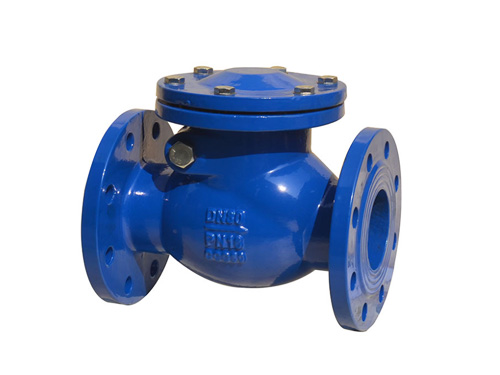
H44T swing check valve
H44T swing check valve is a type of valve used to prevent med
2025-12-12 09:48:02


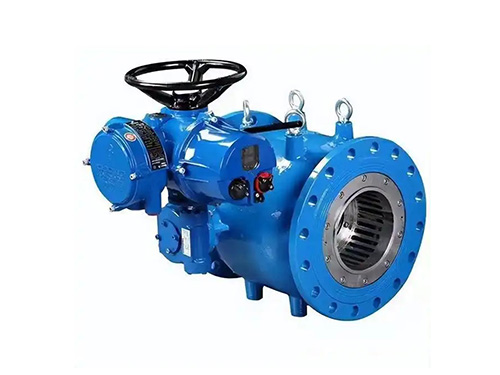
Electric piston type flow and pressure regulating valve is an automated control valve that integrates an electric actuator and a piston regulating structure. The core drives the axial movement of the piston valve core through electrical signals, achieving detailed regulation of medium flow and pressure, and has dual functions of cutoff and stable control. It combines the convenience of electric control with the anti cavitation and low flow resistance advantages of piston structure, without the need for manual duty, and is suitable for industrial scenarios with high pressure difference, large flow rate, and high automation requirements. It is widely used in fluid systems such as water treatment, power plants, water distribution networks, and dam discharge.
The core structure consists of a valve body, piston type valve core, electric actuator, sealing compensation system, and energy dissipation components. The valve body adopts a streamlined axisymmetric flow channel to avoid turbulence; The piston valve core moves axially along the guide rail and is adjusted by changing the flow area with the valve seat. Some models are equipped with multi nozzle sleeves, which use the principle of collision energy dissipation to eliminate high-pressure differential impact; The electric actuator is equipped with a motor and a reducer, integrating stroke limit, torque protection, and opening feedback functions, supporting manual/electric switching; The seal adopts a floating valve seat and elastic silicone seal to achieve bubble level sealing effect, and can compensate for self centering after wear. In terms of material, the valve body is made of cast steel and stainless steel, and the valve core and guide rail are welded with wear-resistant (based on actual reports) alloy to extend the service life under harsh working conditions.
The working principle is based on the logic of "electrical signal mechanical linkage flow feedback": after receiving PLC or remote control signals, the electric actuator converts rotational motion into axial piston movement through the crank connecting rod mechanism. When it is necessary to increase pressure and decrease flow, the valve core moves downward to narrow the flow channel; When pressure reduction and flow increase are required, the valve core moves upward to expand the flow channel. The special channel design ensures that the water flow always flows in a circular shape, limiting cavitation to the center of the pipeline and avoiding damage to the valve body; Multi nozzle holes use water column collision to dissipate energy, effectively resisting high-pressure vibration. The actuator can finely control the valve core opening, with an adjustment accuracy of ± 1% to ± 3%, forming a closed-loop control.
Key performance parameters adapted to automation working conditions: nominal diameter DN50~DN600mm, nominal pressure 1.6~6.4MPa; Suitable temperature ≤ 120 ℃, medium includes clean water, sewage, industrial fluids, etc., may contain a small amount of solid particles; The adjustment characteristics are linear, with an adjustable range of 100:1; The sealing level meets GB/T 13927-2008 Level 1, and the allowable cavitation coefficient is ≤ 0.4; The electric actuator is powered by AC220V/380V or DC24V, with a protection level of IP67 and a service life of up to 15-30 years.
The core advantages of the product are significant: firstly, it has a good degree of automation, supports remote control and system linkage, is equipped with dual protection for overload and travel, and is suitable for intelligent factories; The second is corrosion resistance and stability control, with excellent anti cavitation and anti vibration effects in the special channel design, and stable operation even under high pressure difference; The third is to adjust meticulously, confirm the linear flow characteristics with controllable small opening and low pressure loss; Fourthly, it is easy to maintain and equipped with a hand hole cover and backwash device, making it convenient to replace vulnerable parts and supporting online maintenance; The fifth is flexible installation, which can be installed vertically, horizontally or suspended, and is suitable for complex pipeline layouts.
Typical applications focus on industrial automation scenarios: used in the water treatment industry for pressure regulation of water distribution networks, controlling cooling water flow in power plants, using dams as discharge valves to regulate water levels, adapting process fluid high-pressure differential regulation in the chemical industry, and also applicable to municipal water supply networks, metallurgical circulating water systems, and other scenarios.
Attention should be paid to installation and maintenance: Install according to the flow direction of the medium, and reserve space for actuator maintenance; Install a filter at the front end of the pipeline to prevent impurities from sticking to the valve core; Regularly check the lubrication and sealing status of the actuator, clean the flow channel and sealing surface every 3-6 months, and replace aging seals in a timely manner; Long term shutdown requires switching to manual mode to protect the actuator.
PRODUCT
Copyright © 2025-2026 http://www.xinhuifluid.com All Rights Reserved Hebei Xinhui Fluid Technology Co., Ltd.
Add:Wangtun Village, Siying Township, Botou City, Cangzhou City, Hebei Province
Url:http://www.xinhuifluid.com
Tel:+86-18230173208
Email:liu18230173208@gmail.com