H44T swing check valve
H44T swing check valve is a type of valve used to prevent med
2025-12-12 09:48:02


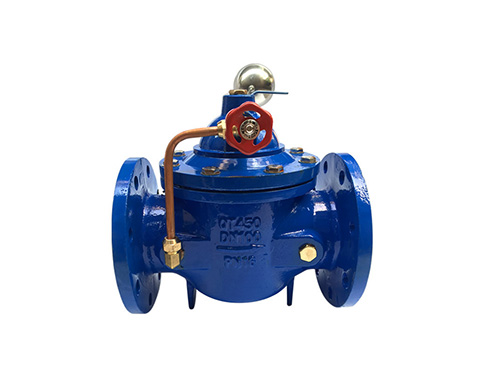
The 100X remote control float ball valve is a diaphragm type hydraulic control valve, mainly used for water tower and pool liquid level control in water supply network systems such as high-rise buildings and living areas. It automatically opens and closes by sensing water level changes through the float ball guide valve. This valve consists of a main valve, needle valve, ball valve, float valve, and micro filter, forming a hydraulic control connection system. It has the characteristics of excellent sealing, easy maintenance, and high accuracy of liquid level control. It can directly use liquid level control without external energy.
The 100X remote control float ball valve is a diaphragm valve that relies on hydraulic automatic control, specifically used for liquid level regulation of water storage containers such as water tanks and towers. It can achieve the automatic water supply effect of "closing when the liquid is full and opening when the liquid drops". The following is a detailed introduction:
Core structure of 100X remote control floating ball valve
The valve consists of a main valve and a hydraulic control connection system as a whole. The main valve includes components such as the valve body, valve cover, diaphragm, and valve seat. The diaphragm is commonly made of nitrile rubber or fluororubber material, which has good sealing performance; The control takeover system includes needle valves, ball valves, float valves, and micro filters. The micro filter can intercept impurities and avoid control system blockage. The needle valve can adjust the closing speed of the main valve, and the ball valve can achieve emergency valve closing operation. And the actuator (floating ball component) is separated from the main valve body and connected through a hydraulic conduit, with good installation flexibility.
working principle
Turn on water supply: When the water level in the pool drops, the floating ball will sag and drive the pilot valve to open. The pressure in the upper chamber of the main valve is released through the conduit, and under the action of the inlet water pressure, the main valve is smoothly pushed open, starting to supply water directly to the container.
Turn off water supply: As the water level continues to rise, the float gradually lifts and gradually closes the pilot valve. The pressure is re established in the upper chamber of the main valve, pushing the diaphragm downwards. The main valve will close smoothly to avoid water hammer impact, and the water supply will stop at this time.
Emergency control: If the float valve malfunctions, the ball valve on the pipeline can be manually closed to increase the pressure in the upper chamber of the main valve, thereby forcibly closing the main valve and achieving emergency water stop.
Product advantages
No need for external sources, energy-saving and worry free: relying on hydraulic power to achieve automatic control, no need for external power, pneumatic or other driving devices, not only simple installation, but also reduces energy consumption and failure probability, and the maintenance process is also simple.
Smooth opening and closing, good protection: By controlling the opening and closing of the main valve through diaphragm and pressure gradient, it can effectively eliminate the damage of water hammer to the pipeline; At the same time, the filter screen of the pilot system can protect the components and extend the overall service life of the valve.
Flexible installation and strong adaptability: The floating ball component is separated from the main valve and can be installed horizontally or vertically. The length of the conduit can also be customized according to on-site requirements, adapting to different installation space limited scenarios, and the liquid level control is not affected by water pressure fluctuations.
Application Industry
Widely used in various industries such as building water supply and drainage, municipal water supply, and industrial production. For example, it can be used to achieve automatic and stable liquid level control in high-rise buildings and residential areas' domestic water tanks, fire water tanks (based on actual reports), clean water tanks and booster pump station reservoirs in water plants, cooling and circulating water tanks in factories, and large water tanks for agricultural irrigation.
PRODUCT
Copyright © 2025-2026 http://www.xinhuifluid.com All Rights Reserved Hebei Xinhui Fluid Technology Co., Ltd.
Add:Wangtun Village, Siying Township, Botou City, Cangzhou City, Hebei Province
Url:http://www.xinhuifluid.com
Tel:+86-18230173208
Email:liu18230173208@gmail.com