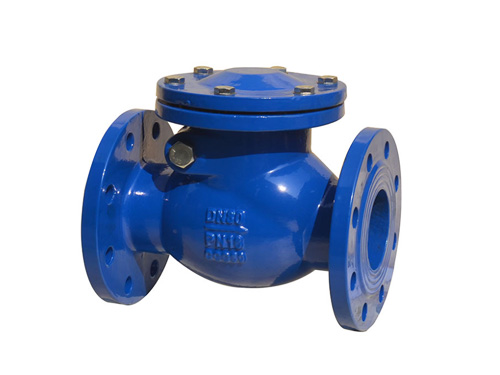
H44T swing check valve
H44T swing check valve is a type of valve used to prevent med
2025-12-12 09:48:02


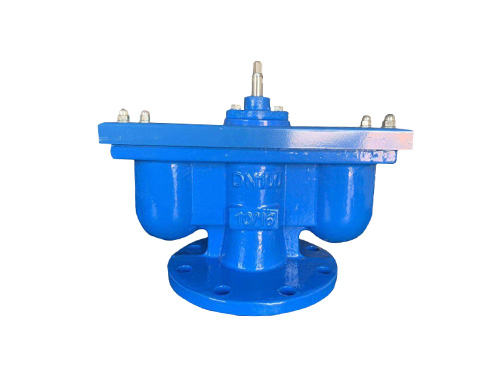
A dual port exhaust valve is a valve used in pipeline systems to remove air or gas, typically installed at high points or locations where air is prone to accumulate. Its main function is to automatically exhaust the air in the pipeline, prevent air blockage, and confirm the smooth flow of fluids (such as water or other liquids).
The design of a dual port exhaust valve typically includes two exhaust ports, one for speed appropriate exhaust and the other for slow exhaust to accommodate different exhaust requirements.
Double port exhaust valve is suitable for pipelines with water as the medium. It is a device used to remove gas from the pipeline, improve the efficiency of water delivery equipment, and protect the pipeline from deformation and rupture. It is a necessary equipment for pipelines.
The working principle of the dual port exhaust valve is based on the floating ball mechanism. When the pipeline is filled with liquid, the float rises and the exhaust port is closed; When air enters the valve, the float descends, opens the exhaust port, and exhausts the air. This design confirms the automatic operation of the valve without the need for manual intervention.
operating principle
When water starts to be injected into the pipe, the plug stays in the open position for a large amount of exhaust. When the air is exhausted, water accumulates in the valve, and the floating ball is lifted. The plug is driven to the closed position to stop a large amount of exhaust. When the water in the pipe is transported normally, if a small amount of air accumulates in the valve to a considerable extent, the water level in the valve drops, and the floating ball also drops. At this time, the air is discharged through the small hole. When the pump stops, the water flow in the pipe is empty, or when negative pressure is generated in the pipe, the plug speed is suitable to open, suck in air, and confirm that the pipeline is complete.
In terms of application scenarios, dual port exhaust valves are widely used in water supply systems, HVAC systems, industrial piping systems, etc. In the water supply system, it can prevent air blockage and confirm the continuity of water flow; In HVAC systems, it can improve the thermal efficiency of the system; In industrial pipeline systems, it can protect equipment from cavitation damage.
When choosing a dual port exhaust valve, the following factors need to be considered:
Material: The valve body material should be corrosion-resistant (based on actual reports), commonly including brass, stainless steel, etc.
Pressure rating: Select the appropriate valve based on the working pressure of the system.
Temperature range: Confirm that the valve can operate normally at the operating temperature of the system.
Connection method: Select internal thread or external thread according to the connection method of the pipeline.
When installing a dual port exhaust valve, the following points should be noted:
Installation location: It should be installed at a high point of the system or in a location where air is prone to accumulate.
Direction: Confirm that the installation direction of the valve is correct, usually indicated by arrows indicating the flow direction.
Maintenance: Regularly check the exhaust function of the valve to confirm its normal operation.
The maintenance of dual port exhaust valves is relatively simple, usually only requiring regular checks to see if the exhaust port is blocked and if the float is flexible. If the valve is found to be unable to exhaust properly, it may be necessary to clean or replace the float.
In short, the dual port exhaust valve is an excellent component in pipeline systems, which can effectively eliminate air and confirm the normal operation of the system. Choosing the appropriate valves and installing and maintaining them correctly can greatly improve the efficiency and efficiency of the system
PRODUCT
Copyright © 2025-2026 http://www.xinhuifluid.com All Rights Reserved Hebei Xinhui Fluid Technology Co., Ltd.
Add:Wangtun Village, Siying Township, Botou City, Cangzhou City, Hebei Province
Url:http://www.xinhuifluid.com
Tel:+86-18230173208
Email:liu18230173208@gmail.com