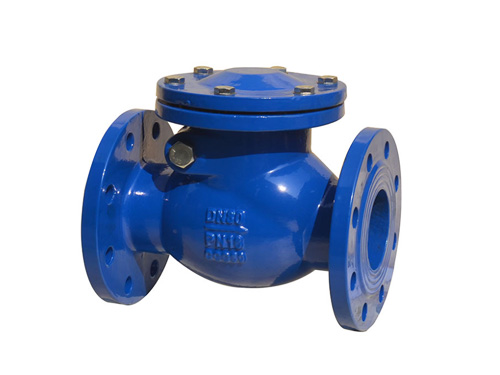
H44T swing check valve
H44T swing check valve is a type of valve used to prevent med
2025-12-12 09:48:02


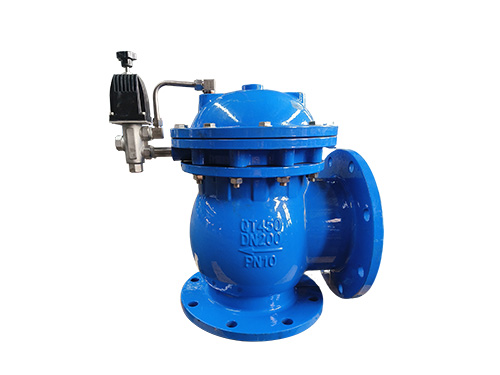
The electromagnetic diaphragm quick opening sludge discharge valve is a one-to-one shut-off valve that integrates electromagnetic control and diaphragm drive. Its core function is to control the valve to open and close smoothly through electromagnetic signals, effectively discharging sediment, dirt, and settled impurities from the bottom of the water tank and pipeline, while avoiding water hammer impact and impurity jamming during the sludge discharge process. It is widely used in scenarios that require automated sludge discharge, such as water treatment plants, sewage treatment plants, sedimentation tanks, and industrial circulating water systems.
Its core structure consists of a valve body, diaphragm drive mechanism, electromagnetic directional valve, and auxiliary components. Valve bodies often adopt angular or straight through designs, with large diameter straight through flow channels. The valve seat adopts a sloping opening design, which is not easy to deposit sediment; The diaphragm drive mechanism is the core execution unit, which uses nylon innovative service rubber diaphragm to divide the valve chamber into upper and lower double chambers, replacing the traditional piston structure and eliminating motion wear; The electromagnetic directional valve is the control core, which receives electrical signals to realize the on/off and directional control of the driving medium. Some models are equipped with manual directional valves for emergency operation. In terms of materials, the valve body is commonly made of ductile iron and cast steel, the valve stem and guide components are made of stainless steel, and the diaphragm and seals are made of wear-resistant (based on actual reports) rubber, suitable for harsh working conditions containing impurity media.
The working principle is based on the logic of "electromagnetic control medium drive diaphragm linkage": the valve needs to be matched with hydraulic or pneumatic driving medium (clean water, compressed air, etc., driving pressure ≥ 0.2MPa). When the electromagnetic directional valve receives the power signal, the driving medium enters the lower chamber of the diaphragm, the upper chamber releases pressure, and under the action of pressure difference, the diaphragm and valve stem move upward at a suitable speed. The valve is fully opened within 3-20 seconds to achieve effective sludge discharge; When the solenoid valve is powered off, the driving medium changes direction and enters the upper chamber. The pressure in the lower chamber is balanced, and the valve core closes smoothly under its own weight and the action of the reset spring to avoid impact damage to the seal. The isolation design between the double chamber diaphragm and the valve body can prevent sediment and impurities from entering the drive chamber, thus avoiding jamming faults from the root.
Key performance parameters adapted to sludge discharge requirements: nominal diameter covering DN40~DN450mm, nominal pressure typically 1.0MPa, 1.6MPa; Applicable media include mud water, sewage, industrial wastewater and other fluids containing impurities, with a suitable temperature of ≤ 80 ℃; The power supply voltage of the solenoid valve can be selected from DC24V, AC220V, etc., with a power of ≤ 15VA; the sealing level reaches level 1 of GB/T 13927-2008, and there is no leakage; The protection level is mostly above IP54, suitable for indoor and outdoor installation environments, and the service life can reach 5-10 years.
The core advantages of the product are targeted solutions to the pain points of sludge discharge: firstly, fast opening and slow closing, with a suitable opening speed (3-20 seconds fully open), good sludge discharge efficiency, smooth closing without impact, and avoiding water hammer damage to the pipeline; The second is practical anti jamming, with a dual chamber diaphragm and valve body isolation design that prevents impurities from entering the drive chamber. Paired with stainless steel moving parts, it thoroughly solves the problem of jamming; Thirdly, it has a good degree of automation and supports remote control and PLC linkage, enabling centralized control of multiple valve groups and reducing manual labor intensity; Fourthly, it is easy to maintain, with a simple structure and few vulnerable parts. The sealing element adopts a nested design, which is convenient to replace and does not require complex daily maintenance.
Typical application scenarios focus on fluid sedimentation and sludge discharge: in water plants, it is used for bottom discharge of flocculation tanks and sedimentation tanks, and is combined with automated systems to achieve quantitative sludge discharge and improve water quality; In sewage treatment plants, adapt to the discharge of sludge from biochemical tanks and secondary sedimentation tanks to avoid sedimentation and accumulation affecting treatment efficiency; In the industrial industry, circulating water sedimentation tanks are used in the steel, chemical, and printing and dyeing industries to discharge impurities such as rust and waste residue from pipelines; In addition, it can also be used in agricultural irrigation reservoirs, municipal drainage networks, and other scenarios, and is the core equipment of automated sludge discharge systems.
Attention should be paid to installation and maintenance: valves should be installed on the outer side of the bottom of the pool or at the lower point of the pipeline, connected by flanges, and the discharge port should be arranged in a tangent line with the sewage pipeline; The drive medium pipeline needs to be equipped with a filter (≥ 100 mesh) to avoid impurities blocking the directional valve; Insulation measures should be taken for outdoor installation, and in low-temperature environments, the accumulated water in the valve should be drained to prevent freezing and cracking; Regularly check the wear of the diaphragm and sealing components, replace them in a timely manner when leakage occurs, and emergency operation can be carried out by manually reversing the valve in case of malfunction.
PRODUCT
Copyright © 2025-2026 http://www.xinhuifluid.com All Rights Reserved Hebei Xinhui Fluid Technology Co., Ltd.
Add:Wangtun Village, Siying Township, Botou City, Cangzhou City, Hebei Province
Url:http://www.xinhuifluid.com
Tel:+86-18230173208
Email:liu18230173208@gmail.com