H44T swing check valve
H44T swing check valve is a type of valve used to prevent med
2025-12-12 09:48:02


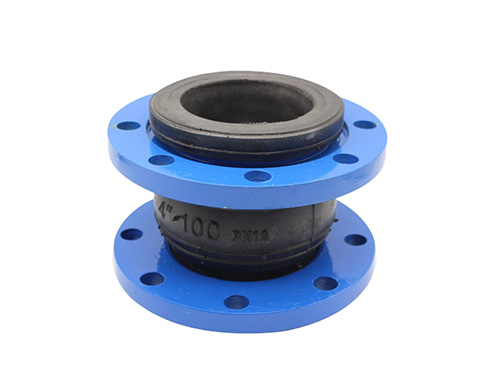
Rubber flexible joint (also known as rubber joint or flexible joint) is a type of flexible pipeline connector with synthetic rubber as the core elastic body and metal flanges or threaded interfaces at both ends. Its core function is to absorb vibration and noise during pipeline operation through the elastic deformation of rubber, compensate for axial, lateral, and angular displacement, and adjust installation deviation and stress caused by thermal expansion and contraction. It is widely used in various pipeline engineering such as water supply and drainage, HVAC, industrial pipelines, fire protection systems, etc. It is a key component for protecting the stable operation of pipeline systems.
The core structure is simple and functionally clear, mainly composed of rubber elastomer, metal flange/threaded interface, reinforcement layer, and sealing components. Rubber elastomers are made of materials such as naturally grown rubber, nitrile rubber (NBR), and ethylene propylene diene monomer (EPDM), and are selected based on the characteristics of the medium; Internally embedded with multiple layers of nylon curtain fabric or steel wire mesh as reinforcement layers to enhance compressive strength and tensile resistance; The metal interface at both ends is made of carbon steel or stainless steel, and the flange complies with the national standard GB/T 9119. The threaded interface is compatible with the GB/T 7306 specification, and the connection is confirmed to be of good quality; The seal and elastomer are integrally formed to achieve leak free sealing. Some high-voltage models are equipped with limit rods to prevent excessive stretching and protect the safety of use.
The working principle is based on the good elasticity and flexibility of rubber materials: during pipeline operation, the vibration generated by equipment such as water pumps and fans is buffered and absorbed by rubber elastic bodies, reducing the impact of vibration transmission on pipelines and surrounding equipment; When the pipeline undergoes thermal expansion and contraction due to temperature changes, the elastic body can expand and contract along the axial direction, deviate laterally or deflect at an angle (usually ± 10-30mm for axial displacement, ± 5-15mm for lateral displacement, and ≤ 15 ° for angular deflection), offsetting displacement stress; During installation, the installation deviation of the pipeline can be compensated for by elastic deformation, simplifying the construction process. Meanwhile, the rubber material itself has a definite sound insulation effect, which can reduce the noise generated by fluid flow.
Key performance parameters suitable for various working conditions: nominal diameter covering DN15~DN1200mm, mainstream specifications DN50~DN400mm; The nominal pressure is usually 0.6MPa, 1.0MPa, 1.6MPa, 2.5MPa, and the high-pressure version can reach 4.0MPa; The applicable temperature varies depending on the rubber material, ranging from -40 ℃ to 120 ℃ (EPDM material has a wider temperature resistance); Applicable media include tap water, sewage, seawater, oil, steam, mildly corrosive fluids, etc; The sealing level meets GB/T 13927-2008 level 1, with no leakage; The service life can reach 5-8 years under normal operating conditions.
The core advantages of the product are outstanding: firstly, it has effective shock absorption and noise reduction, with excellent results in reducing equipment vibration and pipeline noise, and the actual effect is mainly in the operating environment; Secondly, it has good displacement compensation capability, which can counteract axial, lateral, and angular displacements in multiple ways, protecting pipeline interfaces and equipment; Thirdly, it is easy to install and can simplify the alignment requirements for pipeline installation, saving construction time; The fourth is stable and wear-resistant performance (based on actual reports), with different rubber materials adapted to various media and reinforced layers to enhance structural strength; The fifth is cost economy, with low procurement and maintenance costs, and easy replacement without the need for complex tools.
Typical application scenarios are extensive: in municipal water supply and drainage engineering, used at pump outlets and pipe network connections to absorb pump vibrations; In building HVAC systems, adapt intermediate air conditioning and heating pipelines to compensate for temperature displacement; In the industrial industry, circulating water pipelines used in the chemical, power, and metallurgical industries are resistant to various media; In the fire protection system, connect fire hydrants and water pump couplings to protect the stability of pipelines in emergency situations; In addition, it is also suitable for scenarios such as ships and agricultural irrigation, and is an excellent flexible connecting component in various pipeline systems.
Attention should be paid to installation and maintenance: During installation, the flange connection should be evenly fastened with bolts to avoid uneven stress; It is strictly prohibited to use beyond displacement and pressure, and limit devices must be installed in high-pressure scenarios; When the medium is oil or corrosive fluid, it is necessary to match the corresponding performance stable rubber material; Outdoor installation should take measures to prevent exposure to sunlight and freezing to avoid rubber aging; Regularly check whether the rubber body has cracks or bulges, replace it promptly if any damage is found, and confirm the sealing and shock absorption effect.
PRODUCT
Copyright © 2025-2026 http://www.xinhuifluid.com All Rights Reserved Hebei Xinhui Fluid Technology Co., Ltd.
Add:Wangtun Village, Siying Township, Botou City, Cangzhou City, Hebei Province
Url:http://www.xinhuifluid.com
Tel:+86-18230173208
Email:liu18230173208@gmail.com