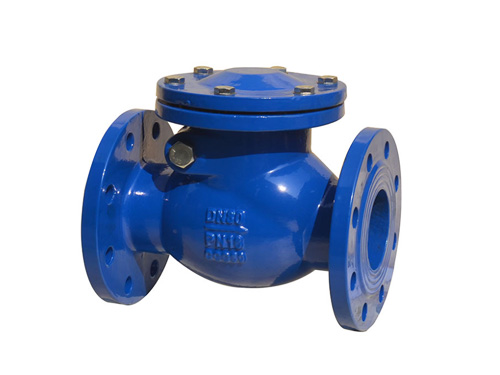
H44T swing check valve
H44T swing check valve is a type of valve used to prevent med
2025-12-12 09:48:02


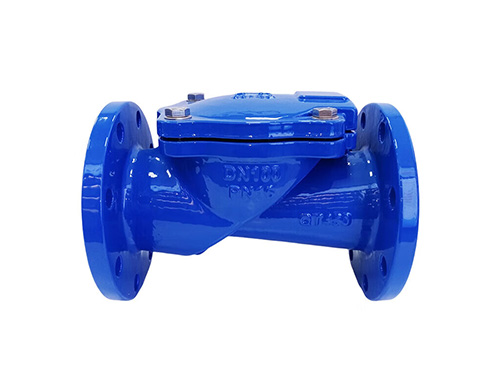
Rubber flap check valve is an automatic check valve that relies on the pressure of the medium itself to drive and the rubber flap as a sealing element. Its core function is to prevent the backflow of the medium in the pipeline, and it has the characteristics of low flow resistance, strict sealing, and suitable opening and closing speed. It is widely used in pipeline systems such as water supply and drainage, sewage treatment, and industrial fluids, and is one of the key equipment for protecting pipeline operation.
Core structure and material selection
1. Overall structural composition
The rubber flap check valve adopts a straight through structure design, with simple and compact core components, mainly including:
Valve body: It is designed with a streamlined channel to reduce the flow resistance of the medium. It is equipped with a valve seat shoulder and a rubber disc installation groove inside, and the connection method supports flange, thread or clamp type (small diameter).
Rubber flap component: The core sealing element adopts an integrated rubber flap (some models with metal skeleton reinforcement), which is fixed in the valve body by bolts or pin shafts, and can rotate flexibly around the fixed axis. The edge of the rubber flap is tightly attached to the seat shoulder to achieve sealing.
Valve Seat: Cooperate with the rubber disc to form a sealing surface. The valve body is an integrated valve seat or a detachable valve seat. Some models have wear-resistant (based on actual reports) treatment on the surface of the valve seat to improve the sealing performance.
Spring (optional): Install auxiliary springs in large-diameter or low-pressure scenarios to confirm that the rubber flap is suitable for resetting at low flow rates, enhancing the sealing effect.
Working principle (pressure driven+elastic reset)
The rubber flap check valve automatically opens and closes through the pressure difference of the medium, without the need for external power. The working process is as follows:
Positive opening: When the medium flows forward along the pipeline, the medium pressure acts on the force surface of the rubber flap, overcoming the gravity of the rubber flap itself (and the spring force, if any), pushing the rubber flap to rotate upward around the pin axis, and the valve opens. At this point, the rubber flap is basically parallel to the flow direction of the medium, the flow channel is unobstructed, and the fluid resistance is low.
Reverse shutdown: When the water pump stops, the pipeline pressure drops, or the medium begins to flow back, the reverse pressure of the medium works together with the gravity of the rubber flap itself (and the spring force) to push the rubber flap to reset at a suitable speed. The edge of the rubber flap tightly fits the valve seat shoulder, forming a seal to prevent the medium from flowing back, avoid water pump reversal, pipeline water hammer, or equipment damage.
Low flow adaptation: The rubber flap is made of flexible material, which can achieve excellent sealing effect through elastic deformation even under low flow conditions, avoiding medium leakage.
Core advantages of the product
Low resistance energy-saving, flow effect: The streamlined valve body and rubber flap are designed to fit the flow channel when fully opened, and the fluid resistance is much lower than that of rotary and lift check valves, which can reduce water pump energy consumption and improve pipeline water delivery efficiency, especially suitable for high flow pipeline systems.
Stable sealing, no leakage: The rubber flap is soft sealed with the valve seat, and the sealing surface is tightly fitted. The rubber material has elastic compensation ability, which can protect the sealing effect and avoid medium leakage even if the valve seat has slight wear.
Smooth opening and closing, noise reduction and anti hammering: The rubber flap has a soft texture, and there is no metal impact sound during the opening and closing process, resulting in low operating noise; When closed in reverse, the response speed is appropriate, which can effectively weaken water hammer impact and protect pipelines and water pump equipment.
Compact structure, easy installation: small size, light weight (only 1/2~1/3 of the same specification rotary check valve), can be installed horizontally or vertically (when installed vertically, the medium needs to move smoothly from bottom to top), flange connection is suitable for most industrial pipelines, saving installation space and cost.
Stable and wear-resistant performance (based on actual reports), long service life: The valve body can be made of corrosion-resistant materials such as ductile iron and stainless steel (based on actual reports), and the rubber flap is made of aging and wear-resistant (based on actual reports) rubber, suitable for complex media such as sewage and seawater, with a service life of up to 5-10 years (under normal working conditions).
Low maintenance cost: simple structure, few vulnerable parts (with only rubber flaps as the core vulnerable parts), easy disassembly and replacement, no need for specialized tools, and no additional daily maintenance required.
Installation key points
Installation direction: It is necessary to confirm that the arrow direction on the valve body is consistent with the forward flow direction of the medium, and reverse installation is strictly prohibited.
Installation position: Priority should be given to installing near the outlet of the water pump (≤ 3 meters away from the water pump) to avoid medium backflow causing the water pump to reverse; When installed horizontally, the valve stem should be vertically upward, and when installed vertically, the medium should move smoothly from bottom to top.
Supporting equipment: Install gate valves or butterfly valves before and after the valve to facilitate cutting off the pipeline during maintenance; For pipelines with high impurities (such as sewage pipes), a filter (with a filtration accuracy of ≤ 5mm) should be installed at the front end to prevent impurities from jamming the rubber valve and affecting the opening and closing function.
Installation gap: When connecting flanges, it is necessary to protect the sealing gasket from being installed in place and tighten the bolts evenly to avoid deformation of the valve body affecting the seal; After installation, it is necessary to reserve maintenance space (recommended to be ≥ 50cm on both sides).
PRODUCT
Copyright © 2025-2026 http://www.xinhuifluid.com All Rights Reserved Hebei Xinhui Fluid Technology Co., Ltd.
Add:Wangtun Village, Siying Township, Botou City, Cangzhou City, Hebei Province
Url:http://www.xinhuifluid.com
Tel:+86-18230173208
Email:liu18230173208@gmail.com