H44T swing check valve
H44T swing check valve is a type of valve used to prevent med
2025-12-12 09:48:02


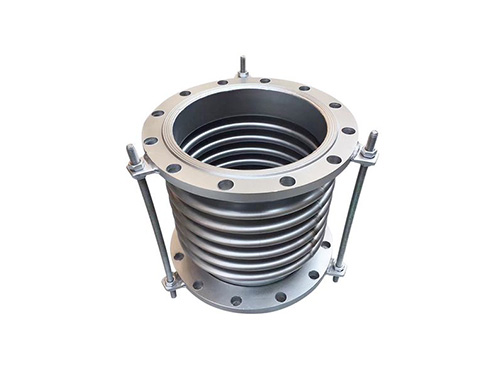
Corrugated pipe compensator (also known as expansion joint, corrugated expansion joint) is a flexible pipeline compensation component with metal corrugated pipe as the core elastic body. Its core function is to absorb the multi-directional displacement caused by thermal expansion, contraction, vibration and impact of the pipeline through the axial, transverse and angular deformation of the corrugated pipe, adjust the pipeline stress, and also have the function of shock absorption and noise reduction. It is widely used in heating, steam pipelines, industrial fluid systems, municipal pipeline networks and other scenarios that require multi-directional compensation. It is a key compensation equipment for high-temperature and high-pressure pipeline systems.
The core structure consists of metal bellows, end pipes/flanges, guide vanes, limit devices, and sealing components. The metal corrugated pipe is made of stainless steel (304/316L) or carbon steel material, and is formed by hydraulic pressure. The corrugated structure endows it with good elasticity and deformation ability; Both ends of the pipe or flange comply with the GB/T 9119 national standard, confirming the universality of the connection; The guide tube is equipped with a corrugated pipe inside to reduce medium erosion and eddy currents, and protect the corrugated structure; Limiting devices (pull rods or spring plates) limit large displacement to prevent damage from excessive stretching of the corrugated pipe; The sealing component adopts welding sealing or flexible sealing to adapt to different pressure conditions. Some models are equipped with insulation layers to adapt to high temperature scenarios and avoid heat loss.
The working principle is based on the elastic deformation characteristics of metal bellows: the thermal expansion and contraction displacement caused by temperature changes during pipeline operation, and the dynamic displacement caused by equipment vibration, are absorbed and offset by the axial expansion, lateral displacement or angular deflection of the bellows (axial displacement ± 10-100mm, lateral displacement ± 5-50mm, angular deflection ≤ 15 °), and the stress impact of the pipeline on the equipment and interface is adjusted; The vibration generated by the flow of the medium is buffered by the flexible structure of the corrugated tube, reducing the transmission of vibration and noise; The welding seal design confirms no leakage under high pressure conditions, while the flexible seal is suitable for frequent deformation requirements.
Key performance parameter adaptation for multi-directional compensation requirements: nominal diameter coverage of DN20~DN1600mm, mainstream specifications of DN50~DN800mm; The nominal pressure is usually 1.0MPa, 1.6MPa, 2.5MPa, and the high-pressure version can reach 10.0MPa; Applicable temperature -196 ℃~600 ℃ (adjusted according to material, stainless steel is suitable for low temperature, carbon steel is suitable for medium high temperature); Applicable media include water, steam, oil, natural growth gas, corrosive fluids, etc; The sealing level reaches GB/T 13927-2008 level 1, and the welding type can achieve zero leakage; The service life can reach 8-12 years under normal operating conditions.
The core advantages of the product are outstanding: firstly, it has good multi-directional compensation ability, which can simultaneously absorb axial, lateral, and angular displacements and adapt to complex pipeline layouts; Secondly, the flexible shock absorption effect is good, buffering equipment vibration and medium impact, reducing system noise; Thirdly, the structure is compact and the volume is much smaller than traditional expansion joints, saving installation space; Fourthly, based on actual reports, the metal material is suitable for high temperature and high pressure working conditions, and the welding seal is excellent; The fifth is wide adaptability, with customizable materials and structures to meet special requirements such as corrosion, low temperature, and high-frequency vibration.
Typical application scenarios are extensive: in industrial steam pipelines, used for boiler outlet, turbine inlet and outlet, compensating for high temperature thermal displacement; In the municipal heating pipeline network, long-distance pipeline segmentation compensation is adapted to adjust the thermal expansion and contraction stress; In the chemical industry, it is used for corrosive medium pipelines, process fluid pipelines, and can withstand complex media; In high-rise buildings, it is used for vertical pipelines in pipeline wells to compensate for vertical displacement; In addition, it is also suitable for scenarios such as power plants, metallurgy, and ships, and can be used in conjunction with power transmission joints and expansion joints to construct pipeline compensation and stress relief systems in all directions.
Attention should be paid to installation and maintenance: During installation, the guide tube should be installed according to the flow direction marked to avoid reverse direction; Strictly prohibit the use of excessive displacement and pressure, and confirm that the limit device is intact; High temperature scenarios require supporting insulation measures to prevent excessive temperature differences in corrugated pipes; When the medium is a corrosive fluid, corresponding stable performance stainless steel materials should be selected; Regularly check whether the corrugated pipe has cracks or deformations, and whether the sealing surface leaks. If any damage is found, replace it in a timely manner to avoid failure under high pressure.
PRODUCT
Copyright © 2025-2026 http://www.xinhuifluid.com All Rights Reserved Hebei Xinhui Fluid Technology Co., Ltd.
Add:Wangtun Village, Siying Township, Botou City, Cangzhou City, Hebei Province
Url:http://www.xinhuifluid.com
Tel:+86-18230173208
Email:liu18230173208@gmail.com